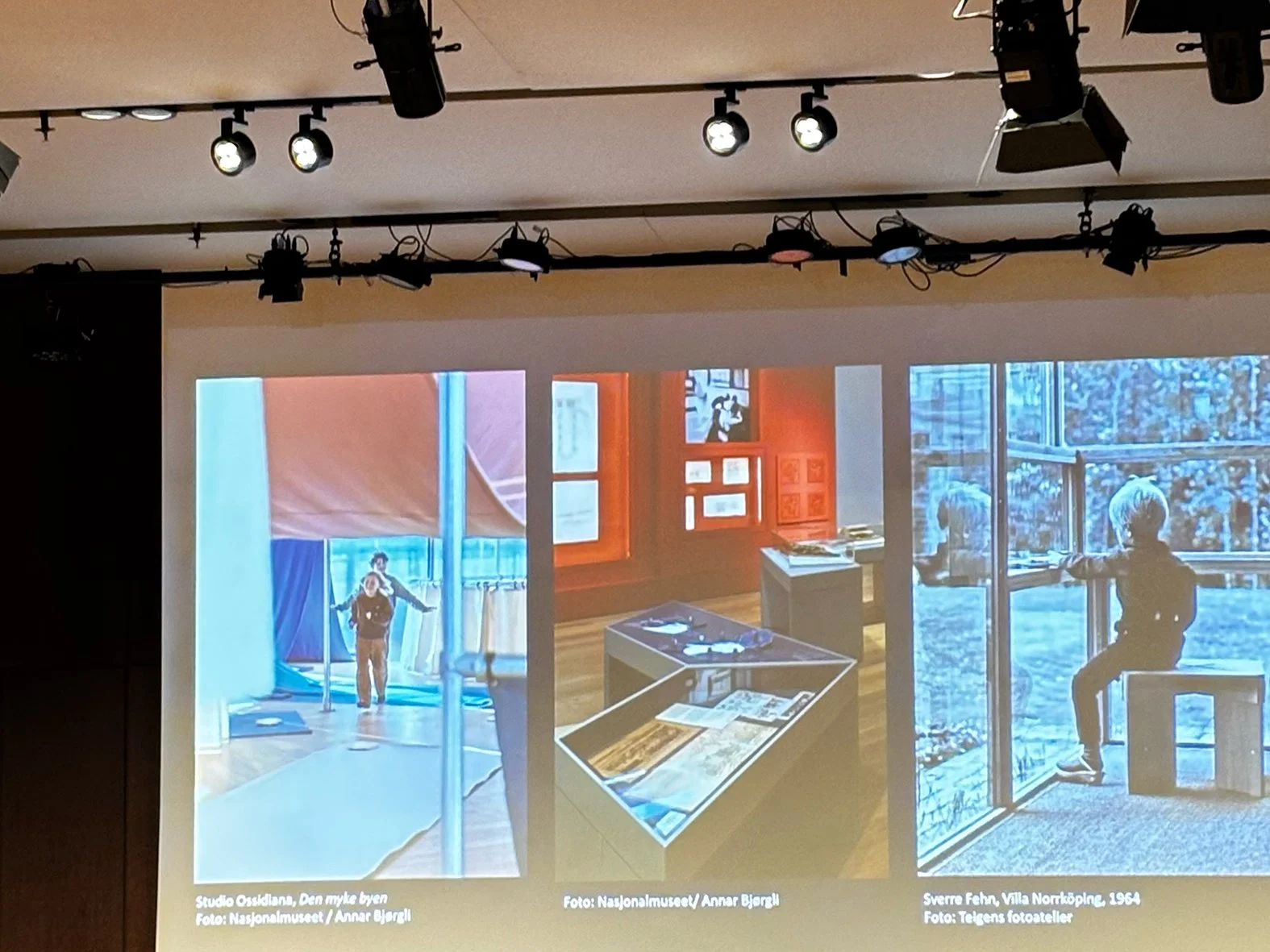
In March, I was invited to write a review for Periskop of the National Museum – Architecture’s exhibition BOOM!. I was therefore interested to discover that my article had been selected as a case study at the National Museum’s Public Engagement Conference, in a session called The Fifth Space.
The session was framed around criticism and exhibition writing as forms of mediation — spaces where knowledge can circulate, be challenged and shared with wider publics.
What unfolded raised rather different questions.
My article was the only critical text under discussion. Moderated by a National Museum employee, the conversation became focused on challenging my critique, my methods and my professional position, rather than engaging with critical discourse more broadly.
That matters because criticism is not an obstacle to public engagement. It is one of the ways public cultural institutions are held in dialogue with the society they represent.
The episode therefore raises a question that extends far beyond one review: who is permitted to speak critically, and who is recognised as a legitimate voice?
This is particularly relevant in a small cultural ecosystem such as Norway’s, where professional networks, recognition and institutional authority can easily reinforce one another. Those within established circles are more readily recognised and invited into the conversation; those outside them can be treated as peripheral, regardless of their knowledge, experience or contribution.
My own background happens to cross architecture, art and education. But I do not think the answer to institutional gatekeeping is to produce an ever longer list of credentials proving that an individual has earned the right to speak.
The more important question is why such credentials should be necessary at all.
A national museum occupies a particular position in public life. It is not simply another participant in the cultural conversation. It has the authority, resources and responsibility to represent culture, facilitate knowledge and create spaces in which different perspectives can meet.
That makes the quality of its engagement with criticism especially important.
If a public institution presents criticism as part of mediation and public engagement, then critical voices cannot simply be invited into the room as long as they remain within an acceptable perimeter. Genuine critical discourse requires room for disagreement, dissent and perspectives that challenge established interpretations and institutional assumptions.
Otherwise, “public engagement” risks becoming something very different: not an opening of the conversation, but an extension of an existing circle.
For me, the value of this episode lies precisely here. Not in whether the National Museum agrees with my review, nor in defending every sentence I wrote, but in what the encounter reveals about the relationship between institutional authority and independent criticism.
The National Museum should be a pinnacle of representation, communication and cultural dialogue in Norway.
That makes the question worth asking:
What kind of criticism can such an institution actually hear — and how open is it to voices beyond the circle it already recognises?
The original review and the full panel discussion are publicly available, so I leave readers to engage with both for themselves.
Read the original review in Periskop
BOOM! – 100 % skivebom
Watch “Det femte rom: media”
National Museum Public Engagement Conference — panel from 6:09:33